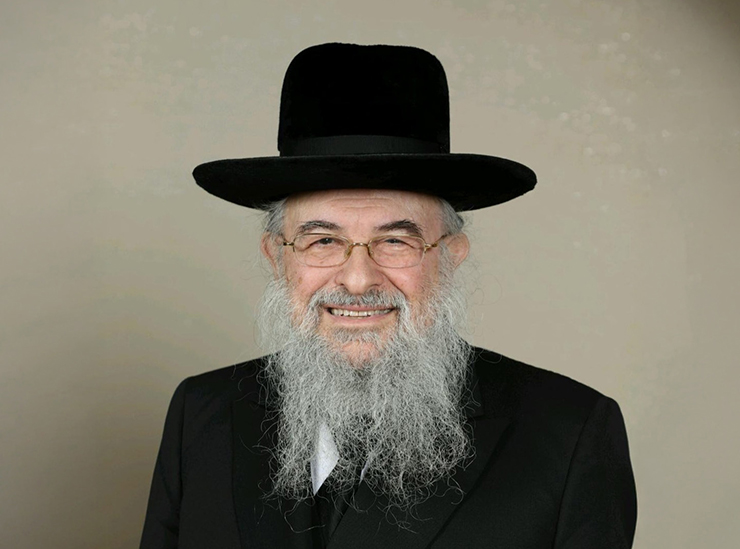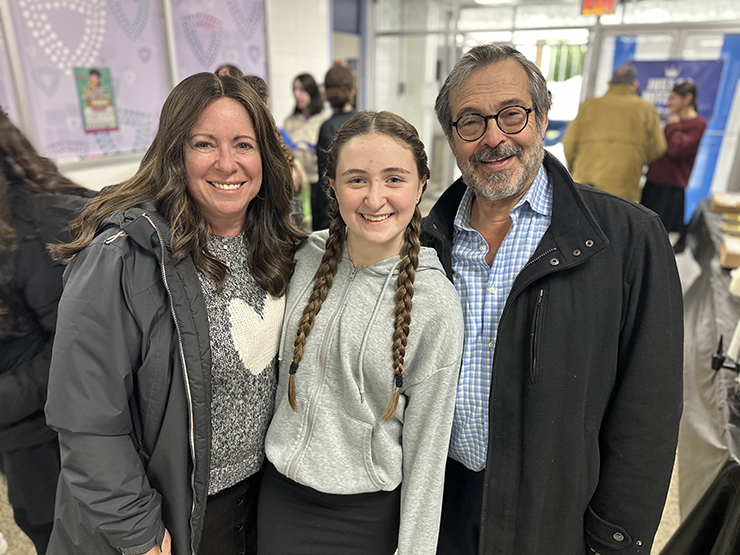
Rabbi Amnon Itzhak Shlita will again be arriving in North America this week. After the huge success of the last two tours in the area it was decided to create a third tour. So far, a total of eight lectures have been scheduled for the region spanning from Toronto to Miami and from New York to Las Vegas. According to the planners, additional lectures are usually added during the visit of three weeks.

In our previous article, we began exploring the concept of brachah (blessing). We explained that brachah represents the transition from infinite oneness to particular twoness – the process by which Hashem’s divine energy (shefa) flows into this world. When we recite brachos and say “Baruch atah Hashem,” we are not blessing Hashem. Hashem, infinite and perfect, does not need our blessings.

We recently visited the Weizmann Institute in Rehovot, and I parked my car a few blocks away on Weizmann Street. Not only is Rechovot Weizmann-focused, but over a dozen streets plus major institutions across the country are named in Chaim Weizmann’s memory. Let’s learn about Israel’s first president.

A hallmark of the Jewish experience is the myriad of brachos (blessings) intertwined into the fabric of daily living. From the moment we wake up (Al N’tilas Yadayim) until the moment we fall asleep (HaMapil), we recite brachah after brachah on every imaginable aspect of our lives: before and after eating, throughout davening, even after going to the bathroom. Every milestone of life is accompanied by a unique brachah as well: from the birth of a child, followed by bris milah and pidyon ha’ben, and subsequently to mark marriage and even death. Life’s milestones are marked and elevated through brachos.

As Shabbos enters, one can almost feel a wave of relaxation and reflection pass over the Jewish People. As human beings, we have the unique ability to step outside of ourselves and view our lives from an external, third-person perspective. While our default experience of life is internal and personal, we occasionally feel compelled to look at ourselves from an outside view and ponder the meaning and direction of our lives. In such reflective moments, we ask ourselves: “Who am I? Where am I going? Why am I living the life I’m living?”

In our previous article, we began exploring the nature of chukim, and the potential limitations of reason and logic. To review, we framed out discussion with the famous line of the Vilna Gaon: “Where logic and human intellect ends, Jewish wisdom begins.” This implies that Judaism does not reject reason and logic but builds upon it. We therefore began our discussion by exploring the purpose and utility of our intellect, and how it can help one ascertain logical proofs of spiritual truths, such as Hashem’s existence.