

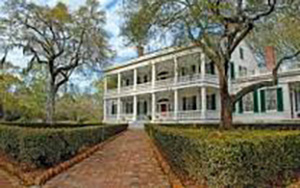
I rushed into our large dining room, eager to share my exciting news. “Father, Madame thinks…” Father and Mother stopped their conversation abruptly. The crystal chandelier sparkled rainbows on the imported white lace tablecloth.
“You have good news, Hope. I can’t wait to hear it.” Father turned to our serving maid Sarah. “You may bring out the first course, please.”
Sarah’s shoes tapped against the marble floor as she headed to the kitchen. Her gray uniform was always impeccably clean. I glanced at the familiar gold brocade wall hangings and the breakfront filled with crystal.
I touched my diamond post earrings and smoothed my pink silk dress.
Father exchanged a look with mother.
“Madame thinks I can win the teen ballet contest.”
“That’s wonderful, Hope.”
The words were right but, somehow, Father’s attention seemed distracted.
Mother came over and kissed my forehead. “Our dancer!”
Sarah brought in a large steaming tureen and began ladling mushroom barley soup into our beautiful, gold-trimmed China soup bowls.
Father took a spoonful of soup. Sarah was standing in the corner and father motioned her over. “This soup is delicious, Sarah. Please tell Henrietta how much I am enjoying it.”
“Thank you, sir.” Sarah smiled.
“We’ll be hosting the ladies’ tea this year,” Mother said. “This year we have so many new members at temple. Everyone loves our new organ.”
I sipped my soup. Father was listening, yet he didn’t say much and seemed to be thinking about something else.
“Grandma Belle told me she didn’t like the organ at temple. She said it was wrong to have it,” I said.
“Grandma Belle was from another era, Hope. This is modern times,” Mother said.
I thought of my grandmother. I still missed her so. She was always praying from a worn-looking, small book, and she would pat my head and look at me with her penetrating blue eyes. “There is so much I want to teach you, but I can’t upset your parents. Hashem should help. Hashem should bring you the light of Torah, Meidele.” I didn’t know what she meant. I knew she disliked Beth El, my parents’ synagogue. We only went there two times a year.
Sarah brought in the salad course on our gold-trimmed plates.
“Madame was so excited about the contest,” I said.
“It’s wonderful news, Hope.” Mother beamed at me and glanced at Father again.
…
That night, I was practicing some of the ballet steps for the contest in my little studio off the den. I could hear my parents whispering. The Mozart minuet drifted through the air as I moved to the music.
Mother’s voice rose. “It’s the South. We have to remember that. Rabbi Padell is wrong to make a big deal about this integration issue.”
“But Charlene. Isn’t prejudice wrong?“
I fingered the pink velvet ribbon that held back my unruly dark curls. I turned off the record player.
“Don’t alarm Hope. Please. Don’t say anything,” Mother lowered her voice. A chill went through me on this warm South Carolina evening.
Alarm me about what?
“I am sure we won’t have to say anything, and this will all blow over,” Father whispered.
I hurried to my room to sit on my pink canopy bed. I tried to block out the worry I felt. The ballet contest was soon. I had a good chance of winning. Everything was as fine as could be.
…
The next morning, I stepped into the kitchen and saw mother sipping her usual mint julip tea and reading the newspaper.
“Good morning, Hope. Your breakfast is ready. Sarah, please bring Hope her oatmeal.”
When Sarah left the room, I whispered, “Is everything okay?”
Mother lowered her newspaper. “Of course. Why do you ask?”
I took some oatmeal from the large serving bowl. “Would you like cut peaches?” Sarah asked.
“Thank you.”
Sarah went back to the pantry.
“I heard you tell Father not to alarm me and I was worried.”
“You shouldn’t listen in on conversations.”
“I didn’t mean to. I’m sorry.”
Mother cleared her throat. “There was an incident. It’s over now.”
I bit into the sweet slice of peach and sprinkled brown sugar on my oatmeal.
Sarah had left her reading glasses on the table. I took them into the kitchen.
“I heard the master’s firm sold to an African American.” Sarah’s back was to me, and she was speaking with Henrietta who was also facing the other way, stirring a pot on the stove.
“Those new integration laws don’t mean beans to people in the South. Master has a good heart. I hope it don’t get him in no trouble.”
Just then, Sarah noticed me standing there. I handed her the reading glasses. “They were on the table.”
“Thank you, Hope honey.”
“Sarah, what happened with Father’s firm?”
“Why, don’t trouble your pretty head. Everything is fine.”
“But what did you mean about the South not following integration?”
Henrietta gave Sarah a long look.
“You know it’s the law now that people like me and Steve and Henrietta are allowed to buy houses wherever we want to,” Sarah said.
“Only that isn’t working in South Carolina,” Henrietta drawled. “No, you got the KKK. There’s a picture of them folks right here on the front page of the paper. They is a scary bunch.“ She pointed to the front page of the paper folded on the kitchen table.
“Don’t go scaring Hope,” Sarah said.
I stared at the photograph of a group of men concealed in white hoods. The headline screamed: Ku Klux Klan Threatens Violence at Synagogue.
“They don’t just hate people like us. They hate Jews, too,” Henrietta said.
I shivered thinking of those evil people.
…
That afternoon, Heather visited, and we sat on my canopy bed and laughed and talked. Then we went to the attic to find a game. When I took Monopoly down from the shelf, the lid slid off and some cards slipped behind the bookshelf. As I reached behind to retrieve the cards, I noticed a framed photograph had fallen behind the bookshelf. I pulled it out and stared at it. It was a photograph of a teenage girl with long, wavy, blonde hair and blue eyes.
“Who’s that?” Heather asked.
“I don’t know.”
After the game, we headed outside to the east garden to play badminton. Sarah brought us a tray with tall glasses of pink lemonade and chocolate chip cookies.
We hit the birdie back and forth. The sun shimmered on our pristine lawn, which stretched for miles. The air was scented with green grass perfume.
Just then, I heard Steve pull up. Father was home. Heather pointed at the car. “Your Cadillac is dreamy.”
I hadn’t ever noticed. It was just our car that our chauffeur Steve drove.
“Your family has a nice car, too.”
“ Yeh, but a Cadillac is neater. Your father’s home, so I’m going home now.”
“I’ll call you later,” I said.
Father strolled towards the house.
“Hi, Father.”
“Hope!”
A worry line on Father’s brow had replaced his usual smile.
To Be continued…
Susie Garber is the author of the newly released historical fiction novel, Flight of the Doves (Menucha Publishers, 2023), Please Be Polite (Menucha Publishers, 2022), A Bridge in Time (Menucha Publishers, 2021), Secrets in Disguise (Menucha Publishers, 2020), Denver Dreams, a novel (Jerusalem Publications, 2009), Memorable Characters…Magnificent Stories (Scholastic, 2002), Befriend (Menucha Publishers, 2013), The Road Less Traveled (Feldheim, 2015), fiction serials and features in Binah Magazine and Binyan Magazine, and “Moon Song” in Binyan (2021-2022).