Last week, my column focused on kidney donations. I would like to add one heartwarming story I heard this week about the same subject that created a tremendous kiddush Hashem. In 2001, Member of the Knesset Rabbi Avraham Ravitz was in need of a kidney transplant.  All 12 of Rav Ravitz’s children were found to be a match for him. Not only did all of his children volunteer to donate a kidney to their father, but they each also fought for the z’chus to be able to do so, so that they could fulfill the mitzvot of both saving a life and kibbud av.

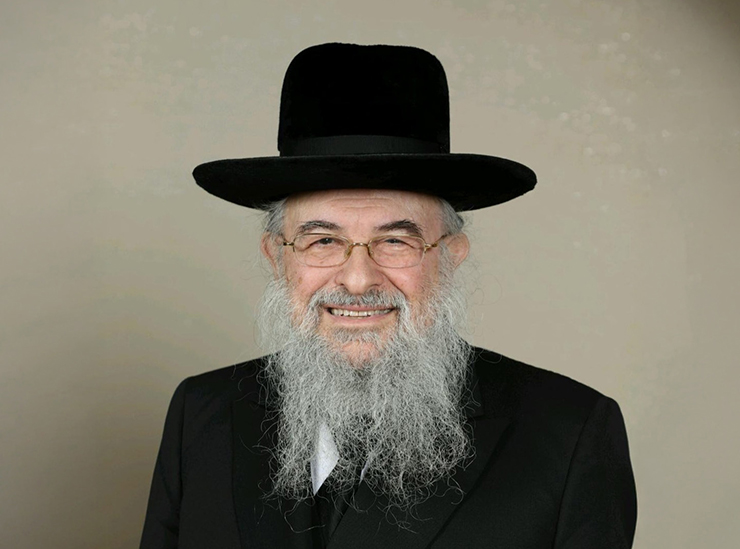
Rav Yeshayahu Heber, a principal and teacher in a yeshiva in Yerushalayim, was receiving dialysis for kidney disease when he became very close with a young man named Pinchas who was also waiting for a kidney transplant.  After an appropriate donor was found for Rav Heber and he received a transplant, he began his own search for a kidney for Pinchas.  Rav Heber did locate a match, but unfortunately, too much time had passed and Pinchas passed away two weeks before his scheduled surgery.  Having witnessed up close the physical and emotional suffering of Pinchas and his parents who had already lost their older son in the Lebanon War, Rav Heber was devastated. His pain spurred him to action and within days after Pinchas’s death, he formed an organization called Matnat Chaim. 

We did not go to the Golan. This may not seem like a big deal, but as we have almost always taken our summer vacations there, the Golan is our home away from home. We love the hikes, the scenery, and the overall atmosphere created by the many frum families vacationing during the summer, especially during bein ha’zmanim, when yeshivos have their three-week break. But this summer, we took a bold step and rented an apartment in Nahariya, the northernmost coastal city in Israel, six miles from Israel’s border with Lebanon.

In the spirit of the nechamah we feel after Tish’ah B’Av, and my need to get myself immunized before the upcoming elections in Israel that will likely be contentious, I thought now would be a good time to reflect on the true, optimistic side of Israeli brotherhood. Israel is the place that every Jew can call home. But while we are all one big family, we live in a very polarized society. A patchwork quilt of many cloths makes up the fabric of our society, each group grounded in ideology vastly different from that of the others. But beneath the glaring differences in our dress, way of life, and belief system, much common ground binds us.

Every year, my family spends a few days touring Yerushalayim while staying in the timeshare apartment in the center of the city that I and my brother inherited from my parents of blessed memory. We decided that this year we would take it easy and not run around too much. We would just “chill.” Well, chilling was not such an option in the boiling weather, and we ended up running around quite a bit. I’ll just share with you a few highlights.

My cousin Adina* was one of those girls you would say had it all. She was sweet, smart, considerate, kind, pretty, and capable. With so much going for her, everyone assumed she would be snatched up and married right away.  But Hashem had other plans. One by one, Adina’s younger siblings began to marry and were blessed with children.  The same was true for her cousins.  Adina danced with genuine happiness at simchah after simchah but wondered when her turn would come.  As the years went by, Adina’s grandmother - my aunt - began to worry for her welfare. The nachas she felt as each of her grandchildren left their nests to move on and build their own families was accompanied by the gnawing concern she felt regarding Adina.  Family members kept Adina in mind, always searching for her elusive match, but with no success.  Nobody would ever verbalize it, but people began to wonder if she would ever marry.