
When flying, some people prefer aisle seats, so they don’t have to bother anyone else when they want to get up. Other people prefer the window seat so they can enjoy the incredible views outside. But I don’t know anyone who prefers a middle seat. It’s the worst of all worlds. From the middle seat you can’t really see out the window and you don’t have direct access to the aisle. In addition, it seems to be an unwritten rule that the person in the middle doesn’t have dibs over the armrests. He must defer to his seatmates on either side.
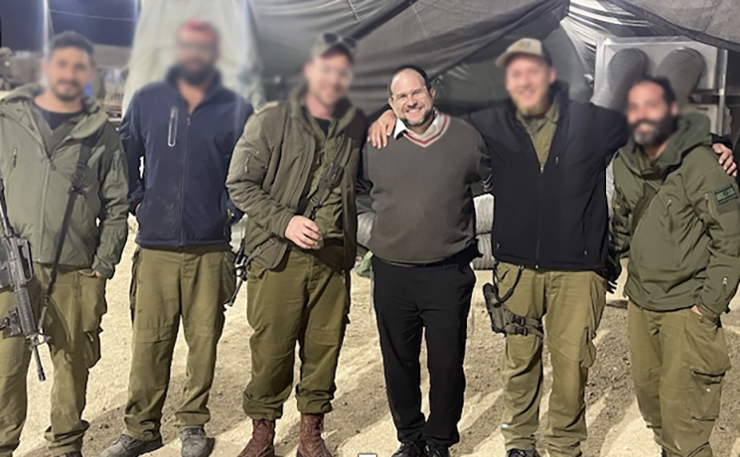
I just returned from a wonderful week in Eretz Yisrael. The main purpose of my trip was to visit our two children who are learning there this year.

However, due to the war and the fact that it is a time of significant challenge and difficulty for klal Yisrael, I wanted to contribute in whatever small way I could.

My personal breakfast of champions each morning includes a bowl of Cheerios. Not Honey Nut, Frosted, Banana, Chocolate, or even mayonnaise-flavored Cheerios, but good ol’ regular Cheerios.

It’s been said that the only one who hears both sides of an argument is the next-door neighbor.

When I was a social work student at Fordham University, I mostly kept my opinions to myself. More than one professor wrote on one of my papers that he or she wanted to hear my voice.

There aren’t many people who are able to impact and influence masses of Jews throughout the world. Rav Matisyahu Salomon zt”l, the late Lakewood Mashgiach, was one such rare individual. Aside from being a scholar of note, he was an eloquent and inspiring orator with an English accent to boot.

Recently, I attended a sheva brachos at which the mother of the kallah spoke. She expressed her tremendous feelings of gratitude to her family and friends and extolled the virtues of her daughter the kallah and her new son-in-law. Then, before concluding, she noted that, during the weeks before the wedding, it had felt strange to be so focused on her simchah when there was and is so much ongoing heartbreak and anguish in klal Yisrael. As she said that, she choked up. Then she looked down and said, “I’m sorry,” and began to cry. After a moment, through tears, she continued by noting the pain of hostages, broken and displaced families, and wounded soldiers. She apologized for her tears twice more.