In our previous article, we began exploring the nature of chukim, and the potential limitations of reason and logic. To review, we framed out discussion with the famous line of the Vilna Gaon: “Where logic and human intellect ends, Jewish wisdom begins.” This implies that Judaism does not reject reason and logic but builds upon it. We therefore began our discussion by exploring the purpose and utility of our intellect, and how it can help one ascertain logical proofs of spiritual truths, such as Hashem’s existence.
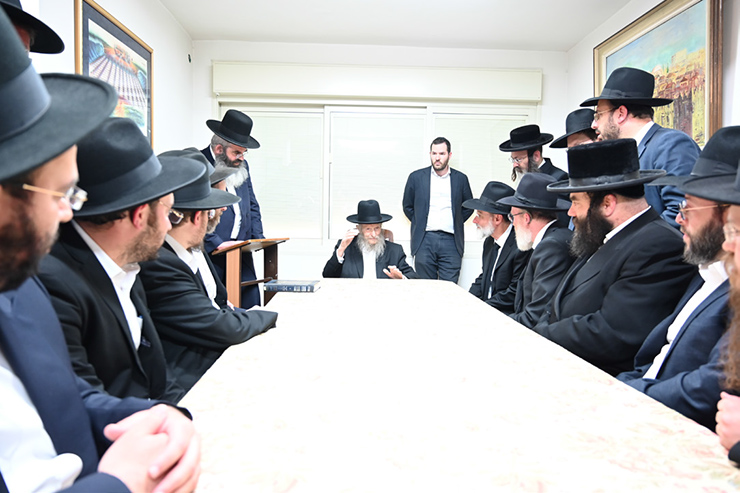
Rav Segal Encourages Daily Mussar Learning in Dirshu’s Kinyan Chochma Program

“I feel such a sense of chibah, of love for this gathering of avreichim who have taken upon themselves the learning of daily mussar with a program. Of course, we are so fortunate in our generation to see the tremendous increase in limud haTorah hakedosha, nevertheless, this gathering has an additional component that makes it special. Today, we are celebrating the combination of learning mussar with Torah. When Torah learning is complimented by the learning of mussar, it is a different Torah learning!”

It was that time of year again. Once a year, for a single day, the legendary Buddhist guru would emerge from his solitary meditation to greet the public. Thousands of people would flock to his far-flung residence to greet him. Some came to ask questions, seeking his wisdom and advice, while others came just to lay eyes on this legendary figure.

In our previous article, we began exploring the nature of Korach’s sin. To review, as many Jewish thinkers explain, Korach’s sin lay in his pantheistic view. He believed that the physical world, as well as all the people within it, are part of Hashem Himself, and therefore already spiritually perfect. Korach says, “Kol ha’eidah kulam k’doshim – The entire nation is holy.” There is no difference between me and Moshe, or me and Aharon, or the Jewish People and their leaders. Everything is Hashem, everything is one. Within pantheism, there are no boundaries or distinctions and nothing higher to connect to. Hashem is only connected to the here and now, and therefore we do not need to look for anything transcendent, higher, or beyond this physical world.

Two old friends met up for lunch one day. They were both extremely successful, with long, productive careers. Yosef was happy, always smiling from head to toe, and gave off an aura of energetic positivity. While Daniel was just as successful on the outside, his life was falling apart. His relationships had gone sour, and his health was failing. He was bitter and unhappy.

We experience life through the medium of time. Each new moment brings with it new opportunities as we ascend through this journey of time. Amidst these constantly moving waves of time, the chagim are specific and set points that carry with them unique energy. Each holiday presents us with the chance to tap into and experience the theme inherent to that point in time. Before we delve into the specific theme and uniqueness of Shavuos, we must first understand time in general.